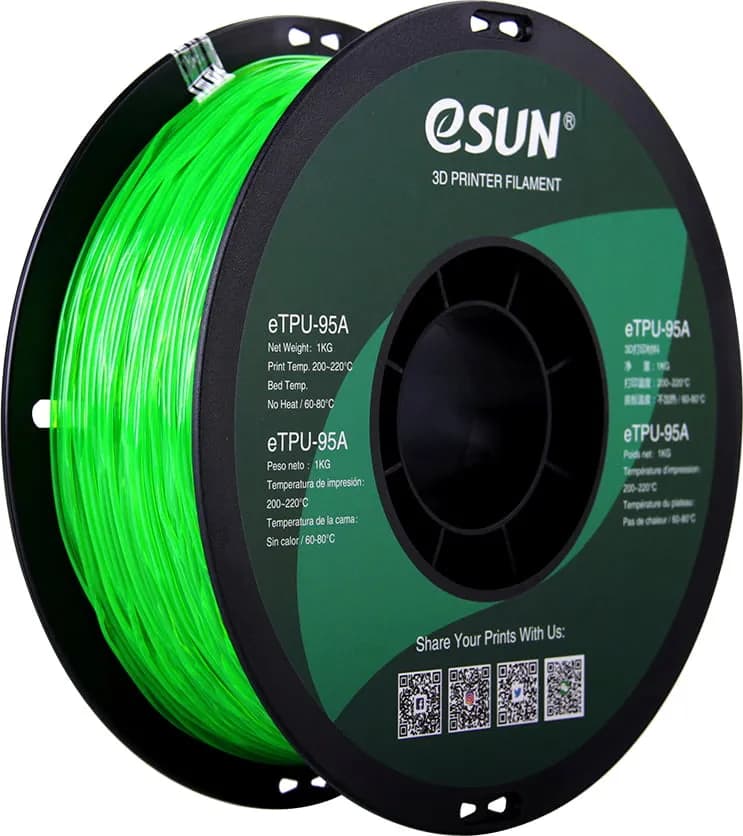
eTPU-95A is the flexible filament most people should start with. At 95A shore hardness it is soft enough to stretch and rebound, but firm enough to feed reliably, and the softer grades are considerably fussier to print. Seven of the ten colours we stock are transparent or clear, which is unusual for TPU and opens up work that opaque flexible filament cannot do.
What it is for
Phone cases and protective covers that absorb a drop instead of passing it on. Seals, gaskets and bumpers where a rigid part would crack or leak. RC tyres, belts and drive parts that need grip and rebound. Straps, grips and other things that get bent every day. The clear and transparent colours also work well for diffusers and light covers.
Printing flexible filament successfully
A direct-drive extruder makes this much easier than a Bowden setup, where soft filament tends to buckle inside the tube. eSUN rates the material for under 100 mm/s and recommends 20 mm/s or slower if the extruder is a remote one. Turn retraction right down, because pulling soft filament backwards is what causes most jams, and dry the spool at 55 °C for four hours or more if it has been open a while.
Recommended starting settings
| Nozzle temperature | 220-250 °C |
| Bed temperature | 45-60 °C |
| Print speed | under 100 mm/s, 20 mm/s or slower on a Bowden |
| Cooling fan | 100% |
| Drying | 55 °C for 4 hours or more |
Colours
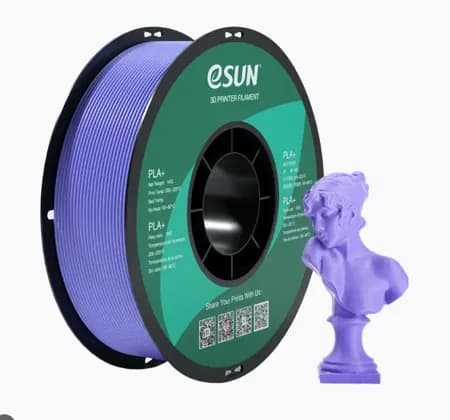
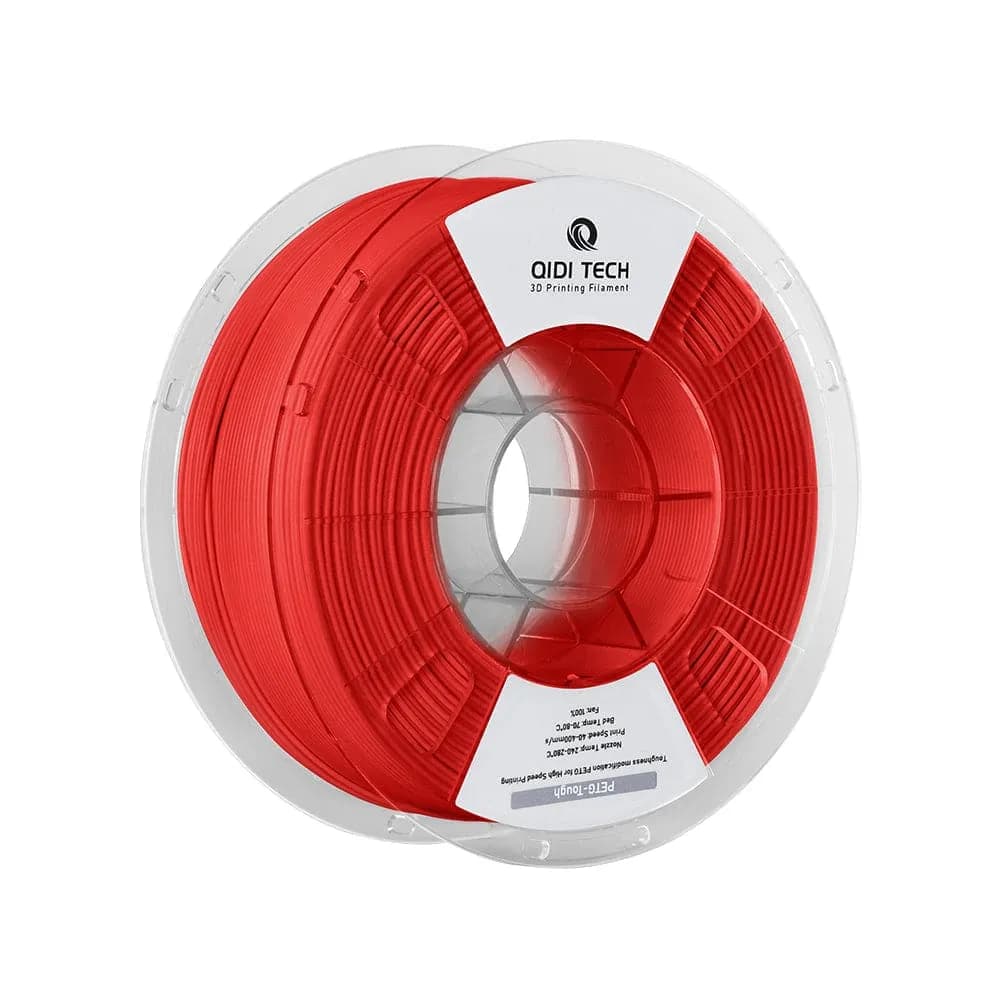
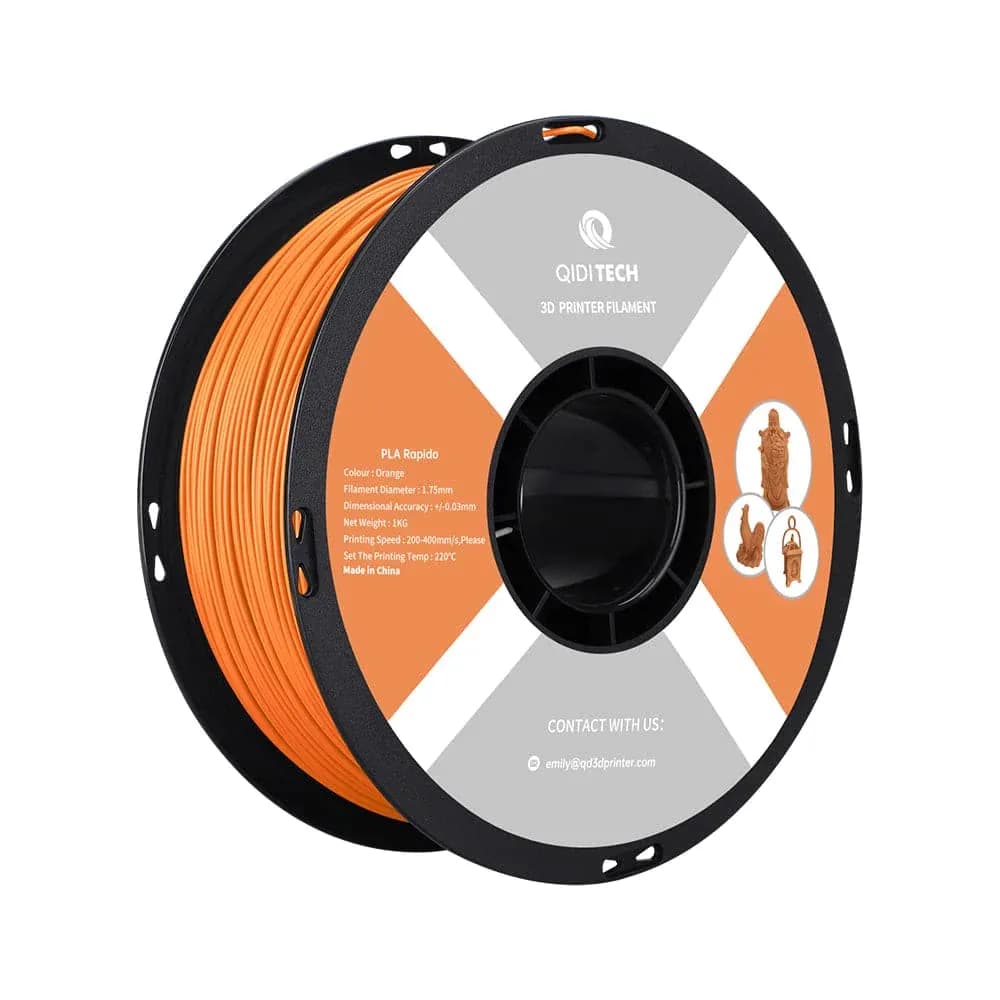
Ten colours are in stock: Black, White, Grey and Clear, plus Transparent Red, Transparent Orange, Transparent Green, Transparent Blue, Transparent Purple and Transparent Pink.