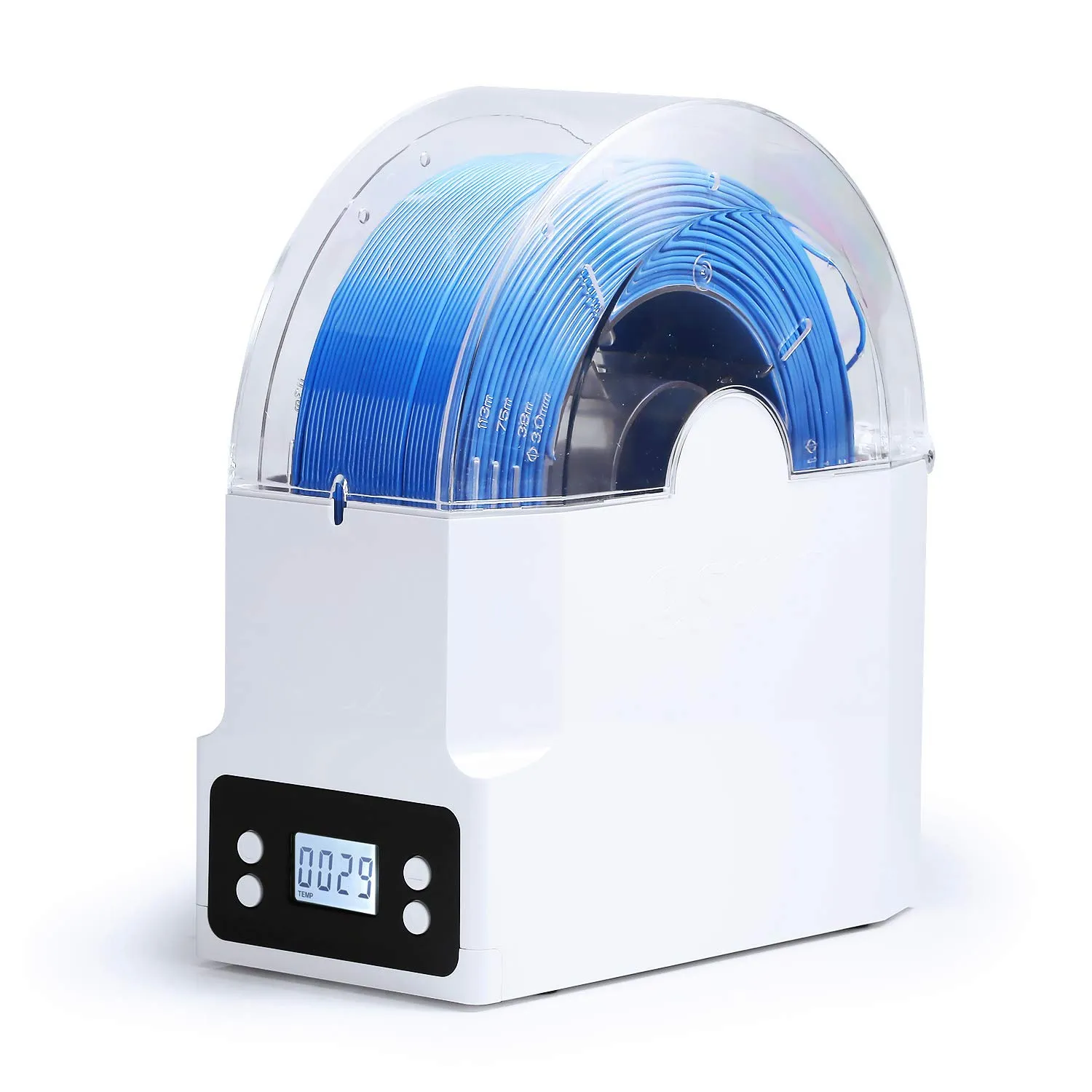
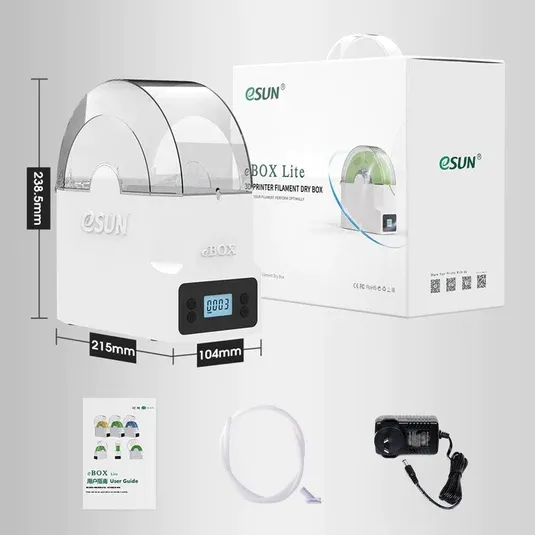
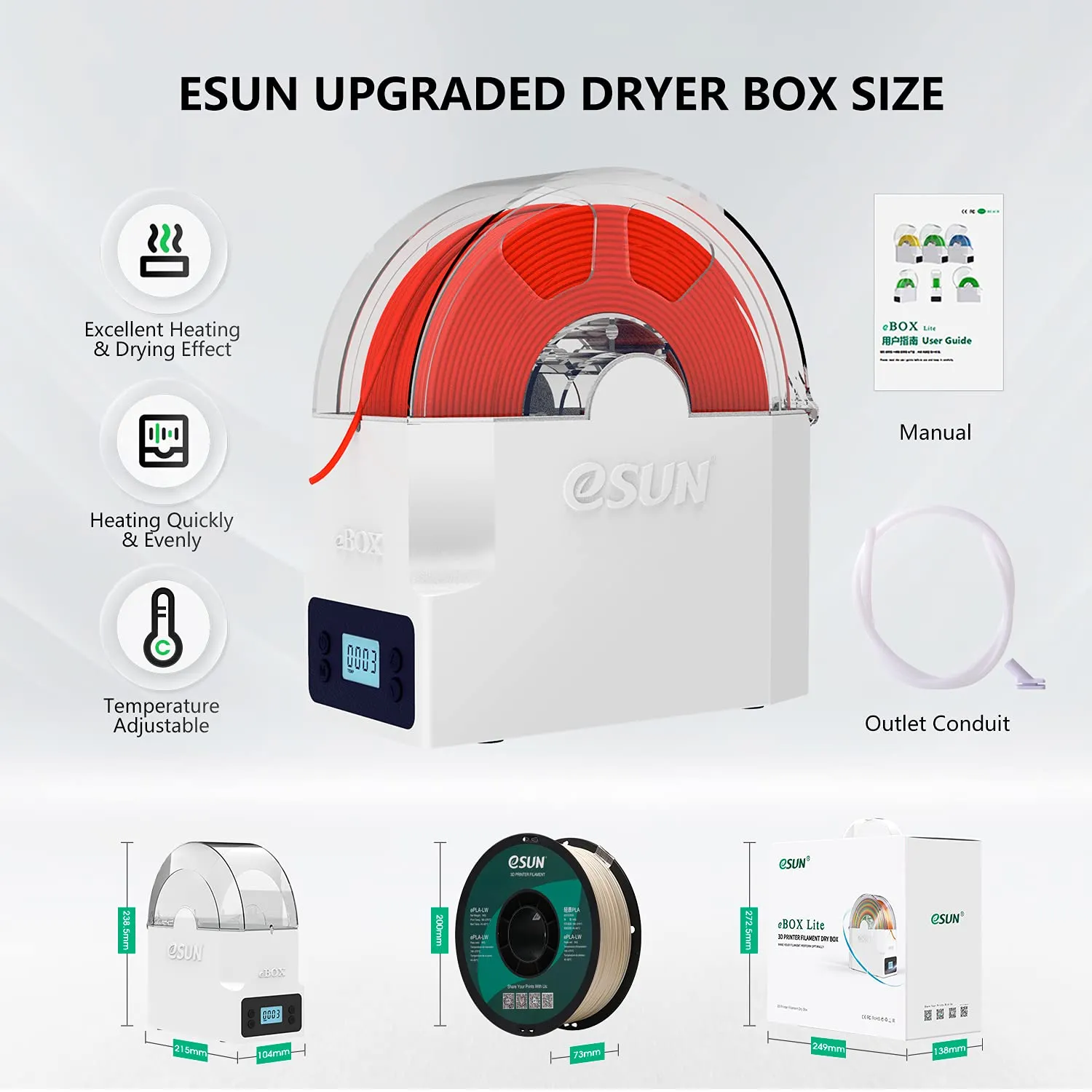
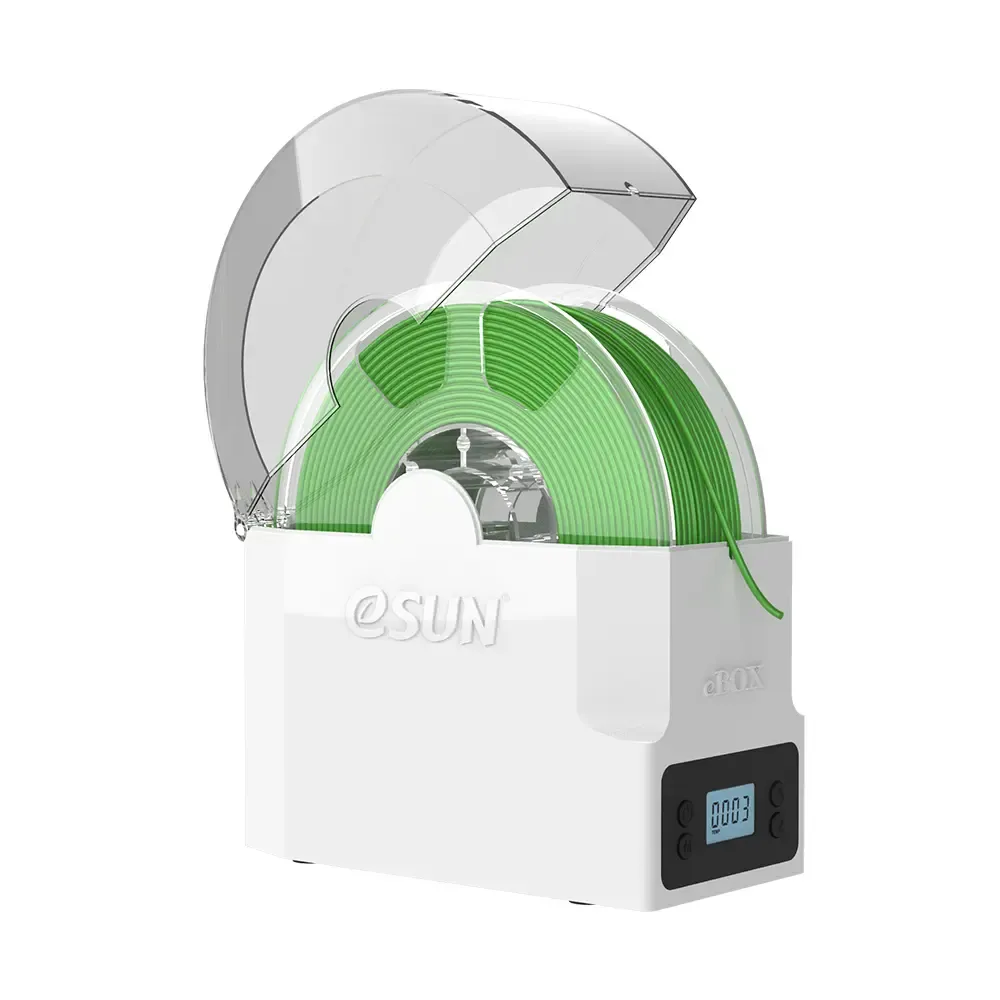
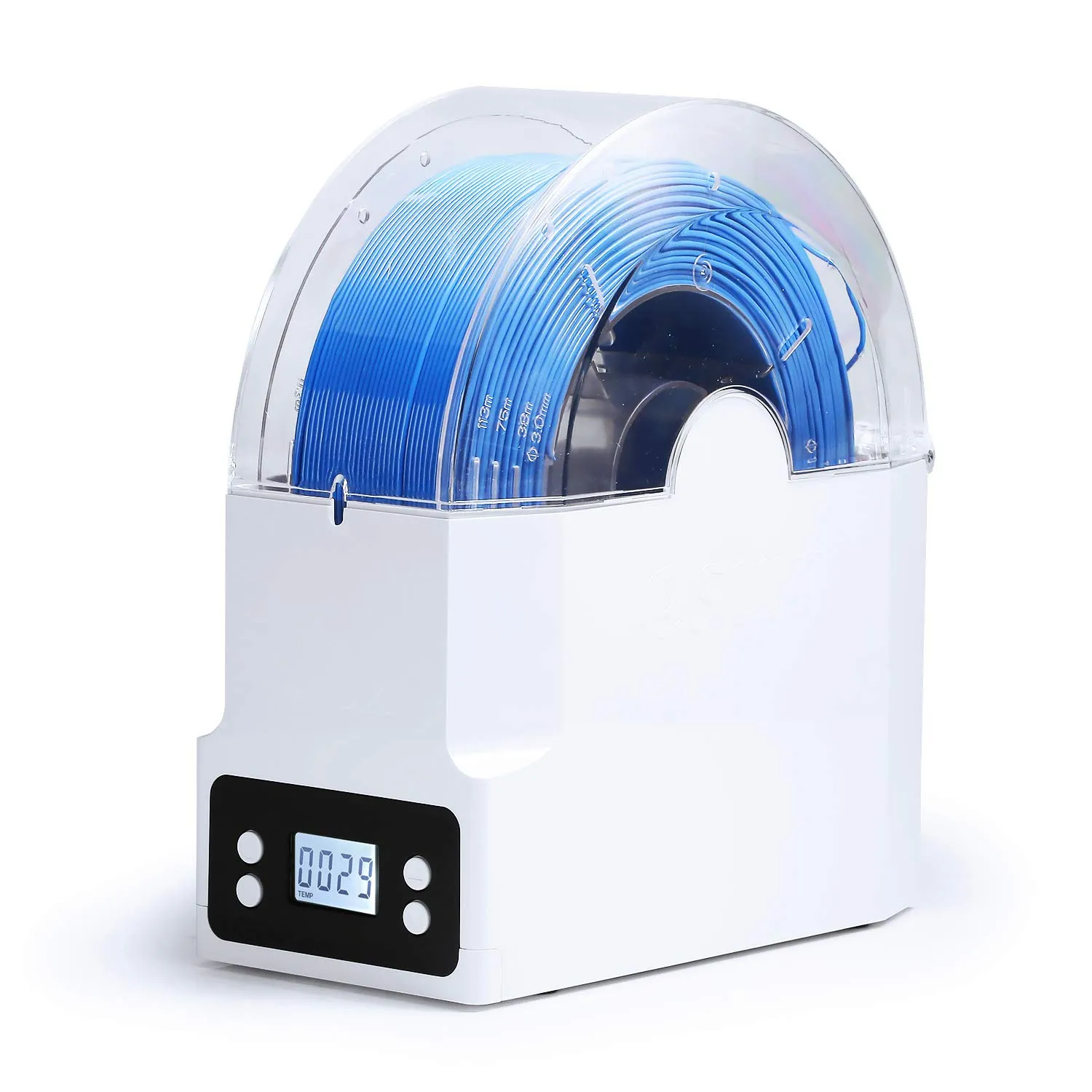
A lot of what gets blamed on the printer turns out to be a wet spool. Filament pulls water out of the air, and in the hot end that water turns to steam. You hear popping and hissing, and you get rough surfaces, stringing, weak layers and parts that snap. The eBox Lite deals with the cause: it dries the spool, then feeds the printer from inside the sealed box, so the filament has no chance to pick moisture back up.
What it does
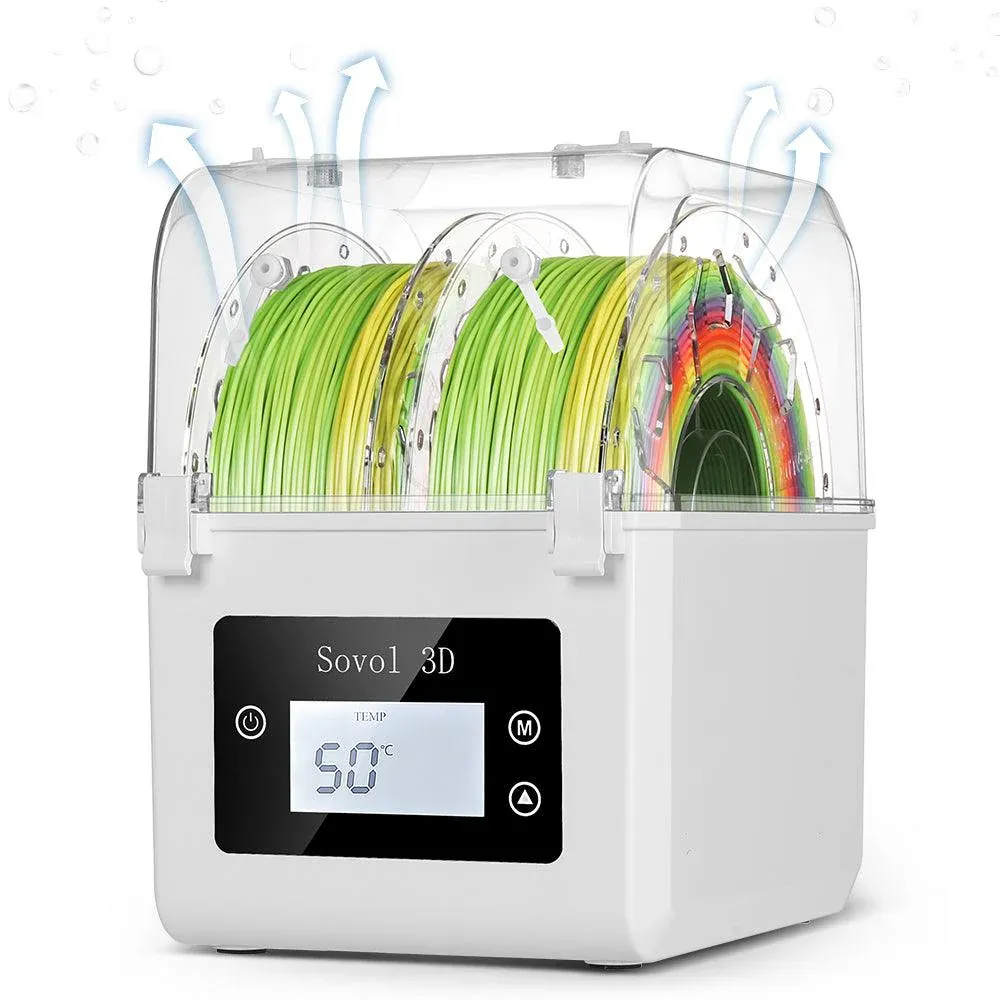
It dries and prints at the same time, with the filament running out of the box straight to the extruder and staying dry for the whole job. Between prints it closes up as an airtight box, which is where an opened spool should be living anyway. A spool you had given up on will usually print like new after a drying cycle. If you use nylon, TPU, PETG or PVA, all of which are far more moisture-sensitive than PLA, it pays for itself in prints that no longer fail.
Which materials need it most
Nylon, PVA and TPU are the worst offenders and can take up enough moisture to become unprintable after a day or two in open air. PETG, ABS and PC benefit noticeably. Even PLA comes out cleaner from a dry spool, particularly through a humid Tbilisi summer.
Specifications
| Heating levels | Three, reaching 40 °C, 50 °C and 55 °C inside the box |
| Suggested level | PLA and PLA+ level 1, ABS and PETG level 2, PVA, nylon and PC level 3 |
| Timer | Countdown in half-hour steps |
| Heater | 35 W |
| Power | AC 100-240 V input, DC 24 V 2 A output |
| Capacity | One spool, with a slot for desiccant |
| Weight | 750 g |
Figures are from the eBOX Lite manual, measured at 20 °C and 55% room humidity.
Good practice
Dry a new spool before a long or important print rather than after it has failed. Keep the box shut between jobs, and put the desiccant that came with your filament inside it. Anyone printing engineering materials regularly will get more out of a dryer than out of most other accessories.